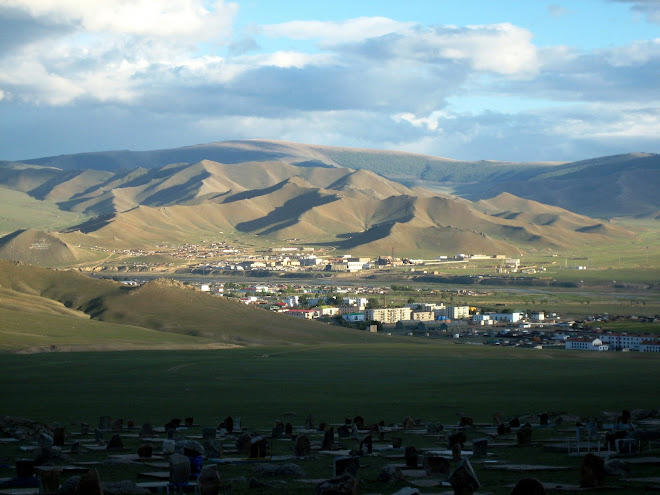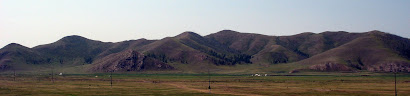
Burengiin Nuruu Mountain Range

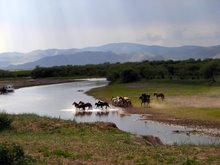
Burengiin Nuruu Mountain Range

History of the Peace Corps Program in Mongolia

Peace Corps began its program in Mongolia in 1991, the same year the US Embassy opened in Ulaanbaatar, the nation’s capital city. Since then, over 600 Peace Corps Volunteers have served in Mongolia as English language teachers trainers, English teachers, community economic developers, environmental educators, and health educators. I will be a member of the 18th group of Volunteers to serve in Mongolia and the 3rd group of Community Youth Development Volunteers (the 1st CYD Trainees came to Mongolia in June of 2005).

Country Assignment

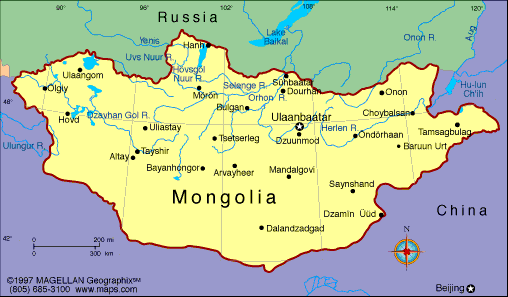
  • Country: Mongolia (Outter)
  • Program: Youth Development
  • Job Title: Life Skills Trainer (also: English teacher, Child Caretaker, Fund Raiser, Events Organizer, and IT Trainer)
  • Orientation (Staging in Atlanta, GA): May 31-June 2, 2007
  • Pre-Service Training (in Darkhan and Sukhbaatar, Mongolia): June 3-August 18, 2007
  • Dates of Service (in Darkhan at Sun Children formerly "Asian Child Foundation" - a non-profit, non-government Japanese funded orphanage of 37 Mongolian children opened since 8/25/2005): August 19, 2007- August 18, 2009

Location and Nature of the Job

CYD Volunteers are placed in provincial centers with population between 15,000 and 70,000. A few CYD Volunteers are placed in Ulaanbaatar, where the population is reaching 1 million. I will work with youth-focused NGOs, children’s centers, schools, and civil society organizations to address major challenges confronting Mongolian youth today, such as education, life skills, employability, and leadership. In addition, the work will involve workshops and presentations at schools and community agencies and will entail traveling to other outlying communities that have less access to information and training. Given the vast distances in Mongolia, these visits will often require overnight stays.

Showing posts with label Culture. Show all posts

Saturday, August 4, 2007

The Cultural Gift of a Del, Made With a Mother’s Loving Hands

For the past four days, my Mongolian host mother has been busy handmaking my del.

A brief interruption for a cultural explanation:
A del is the Mongol’s traditional garment worn on both workdays and special days. It is a long, loose gown cut one piece with the sleeves; it has a high collar and widely overlaps at the front. The del is girdled with a sash. Each ethnic group living in Mongolia has its own del distinguished by cut, color, and trimming. With the increase in European dress, especially with the women, the del has evolved to adapt to the frequent demands of the latest fashion, ranging in colors and choice of fabric as well as in the elegance of the cut and originality of the trimmings.

As I was saying, my host mother has been sewing my del on an old-fashion portable sewing machine that she hand-cranks with her right hand while pushing the material to be sewn (without the help of pins) with her left. I am amazed at how she manages to create perfect straight lines and design a dress pattern that fits flawlessly without the help of a measuring tape.

Watching her work, I am greatly reminded of my biological mother. My Mongolian host mother greatly resembles my Vietnamese biological mother. They both have a penchant for bubble gum colored lipstick. They both are masters at sewing, even owning similar old-fashion black sewing machines adorned with hand-painted flowers. Even their kisses are the same; the tender ‘sniff’ of the nose to the receiver’s cheek – a trait I had previously only associated to Vietnamese culture but now realized existed elsewhere; its origin remain unknown.

I am excited to wear the finish product, an honor I will save for my swearing-in ceremony in UB. Then, I will not only look the part of a Mongolian but I will feel like one too.

Saturday, July 28, 2007

Religion: Buddhism and Visit to the Buddhist Monastery, Амарбаясгалант Хийд

Note: The following blog posting on religion is dedicated to my college Theology advisor, a Professor J. Murphy.

As a part of Cross-Culture Training for PST, all three host community groups had a schedule visit to Amarbayasgalant Khiid (Амарбаясгалант Хийд), one of the top three Buddhist monasteries in Mongolia. Amarbayasgalant Khiid was originally built between 1727 and 1737 by the Manchu emperor Yongzheng and dedicated to the Mongolian Buddhist Zanabazar, whose mummified body was later moved there in 1779. While touring the monastery grounds (27 temples and statues, though only five temples are open to tourists), I couldn’t help but noticed how similar the architecture was to Gyeongbokgung, the main palace of the Joseon Dynasty in Seoul, Korea. From the symmetrical layout to the imperial color scheme, the architecture was distinctively Chinese. I later found out that the monastery was built according to the Manchu style. My earlier thought makes sense given that both Mongolia and South Korea were influenced by the Chinese.

The history of Buddhism has a difficult past in Mongolian history. In 1924, when Bogd Khaan – the 8th Jebtzun Damba (reincarnated spiritual leader of Mongolia) – died, the then communist government prevented a successor from being found. The years of repression that followed peaked in the spring of 1937 when the government ordered the army to destroy religion. The obliteration that followed resulted in 700 monasteries being destroyed and 17,000 monks arrested, never to be seen again. Freedom of religion would not be restored until the democracy movement in 1990, 53 long years later.

Today, around 80% of Mongolians claim to be Buddhist of the Mahayana variety as practiced in Tibet (popularly known as Tibetan Buddhism). However, as culturally observed by curious PCTs, Mongolians tend not to be the practicing kind. In the northern aimags of Khentii, Selenge, Bulgan and Khovsgol, the Buddhism that is practiced is mixed with elements of Shamanism. This is largely because during the time of religious oppression, Shamanism survived because there were no books or buildings to destroy. And later on, with the installation of religious freedom, it co-existed in within the mix of Buddhism.

Two to three generations of Mongolians grew up without Buddhism. Maybe the reason why Mongolians identify themselves as Buddhist even though they don’t practice is because most people no longer understand the Buddhist rituals or their meanings, and the current standing monasteries in Mongolia suffer from a chronic lack of trained Buddhist lamas.

Friday, July 27, 2007

Heat Exhaustion: Mongolian Summers

Mongolia has an extreme climate; it is so far inland that no sea moderates its climate. Only in summer does cloud cover shield the sky but not by much; the sunshine is intense. Before arriving here, I had wondered why Mongolia was nicknamed the “Land of Blue Sky”. With over 260 sunny days a year, even during the 6-8 months of winter, the nickname is understandable.

Lately, it has been really hot. In the past week, the temperature has not dip below the 90F degree mark. Combined with the intense sun, it is no wonder that quite a few of us have been sick; the culprit, most likely being, heat exhaustion. In the States, one can escape the heat by ducking into the nearest building or public bus or moving vehicle, which most likely will be air conditioned. Here, there is no such luck. You would be lucky to find a fan let alone AC. Then there is the strange Mongolian phenomenon of eating hot food during hot sweltering days. There have been countless times I’ve come home from school for lunch in the peak of the hot afternoon to be greeted with steaming soup and boiling tea – right after my host sister comments on how hot it is outside (and in).

Saturday, July 21, 2007

Host Family Trip: Eej Mod (Mother Tree) and Elements of Shamanism

My host family has a habit of planning ‘cultural’ family weekend trips for myself and a fellow PCT, Jason, who’s host family is family friends with mine. Such weekend days are usually told to us at the last minute and, thus, involves a bit of kidnapping (on their part). The last family trip was a fourteen hour adventure to the borders of Mongolia-Russia, the khodoo, and a picnic at Saihnii Hutul (Саихны Хөтөл) National Park. This time, the rendezvous was to Eej Mod (Mother Tree) and basin where the mighty rivers of Orkhon Gol and Selenge Gol meet.

Eej Mod is place where Mongolians often come to seek solace and advice, and make offerings of vodka, milk, and khatag (a blue ceremonial silk scarf symbolizing the bestowal of blessings and good-luck wishes upon those who receive it). Mongolians revere the milk of the five domestic animals (sheep, goat, cow, camel, horse). They wish all things, especially human feelings, would be as white as milk. The color white is the symbol of all things beneficial – happiness, purity, and frankness. Like the ritual preformed when one encounters an ovoos (the large piles of rocks found on mountain passes, repositories of offerings for local sprits), pilgrims ask for a wish to be granted and circle the tree clockwise three times. Legend has it that a pregnant woman, seeking shelter from a heavy rain storm, sought refuge under this particular tree and gave birth to her child, hence the name, Eej Mod (Mother Tree).

Eej Mod (Mother Tree)


Where the mighty rivers of Orkhon Gol and the Selenge Gol meet.


Friday, July 20, 2007

The Pressures of Alcohol in Mongolian Culture and How to Properly Accept a Vodka Offering

The subject of alcohol pressure and alcohol consumption in Mongolia had thoroughly been discussed prior to our arrival into our host communities. Warnings were given and demonstration of alcohol refusal was shown but wouldn’t you know it, it did no good. It is not easy to convince a Mongolian that you do not want to drink alcohol. Rather than make excuses and getting called ‘muu’ (‘bad’, which has happened several times), it is much easier to go through the motions, put the cup to my lips, sip as much as I can bear and pass the cup back to my host. Elders instruct the youth to: “Taste alcohol barely in the prime of life”; Drink alcohol moderately in the maturity of life”; Drink alcohol enjoyably in older age,” however, the actual practice is a bit different.

When one is offered vodka (before the first round for it is also tradition to take three rounds of vodka; one cannot just get away with the courtesy one shot), there is a short ritual to honor Father Heaven, Mother Earth, and the ancestors. The ritual goes: dip your ring finger of your right hand (‘yadam khuruu’) into the glass, and lightly flick a drip once towards the sky, once towards the air ‘to the wind’ and once to the ground, and end with a wipe across your forehead. This expresses the following meaning:

Be serene, the blue sky!
Be calm, the hole earth!
Be contented, humankind!

Food and drink are accepted with the right hand; the left hand is only used to support the right elbow. Similarly, offerings are presented this way as well. Demonstration picture below (although this picture is slightly wrong – you can tell we are still in the learning stages; the host usually has the offering poured before presenting it, never does he let the guest hold the glass while he pours).

Wednesday, July 11, 2007

Naadam – “The Three Manly Sports” (Erinn Gurvan Naadam)

1. Wrestling

Wrestling is national sport of Mongolia; it is the highlight of the Three Games of Men during Naadam (July 11-13). There are no weight categories or age limits in Mongolian national wrestling and during Naadam, every willing and curious man is given an equal chance to compete (including the American PC boys of Dulaankhaan host community; video footage link yet to be posted). The wrestlers wear heavy boots, a very small tight-fitting loincloth, a pair of sleeves which meet across the back of the shoulders resembling a tiny vestige of a jacket, and a pointed cap of velvet. It is rumored that this “uniform” came to be because during one Naadam, a woman had beaten all the contestants (wrestling is the one sport during Naadam that is reserved only for men to participate). The contestants come out on the field leaping and dancing, flapping their arms in imitation of an eagle (the “Eagle Dance”), then slaps with both hands his thighs and buttocks – a sign to his opponent that he is ready to begin.


2. Horse Racing

Mongolia’s second-biggest sport is horse racing. Jockeys are children between the ages of five and 12 (Mongolian children have been riding since infancy; “The nomad is born in the saddle”), racing their horses over open countryside rather than around a track; courses range from 15km-30km, depending on the age of the horses. The winning horse receives the honorary tile of ‘tumnii ek’ or ‘leader of 10,000’.


3. Archery

Archers use a bent composite bow made of layered horn, bark and wood. Arrows are made of willow and feathers from vultures and other birds of prey. The distance is 75m for men and 60m for women. Men shoot 40 arrows and must score greater than 15 points; women shoot 20 arrows and must score great than 13 points using the same bow. The winner earns the title of ‘mergeb’ or ‘super marksman’.

Saturday, July 7, 2007

Culture Observation: The Popularity of Hair Dyeing

Hair dying is rather popular with Mongolians, changing their natural shade of black hair to the various hues of red, yellow, and brown. And the hair dying is not just a woman’s indulgence; the men too like the quick change of their looks that hair dyeing offers. I recall during one ger visit in the khodoo (countryside), when I looked up to reach for my airag (fermented mare’s milk) offering from my male Mongolian host (more on the rituals of visiting a ger later), I was struck by the intensity of his maroon hair – which could only come from a bottle.

Tuesday, June 26, 2007

A Taste of Mongolian History: The Legend of Sukhbaatar

The provincial capital of Selenge, the name ‘Sukhbaatar’ translates to “Axe Hero”. In the center of Sukhbaatar square stands a statue of Damdin Sukhbaatar. Sukhbaatar is an important historical figure in Mongolian history, declaring Mongolia’s Independence from China in July 1921. His face dominates many currency notes and there are a number of things that bear his name: the provincial capital (aimag center) of Selenge, a providence (aimag), and a large square in the capital of UB. He was born in 1893, appointed Commander-in-Chief of the Mongolian People’s Revolutionary Army in 1921, and died in 1923 at the age of 30 – quite the busy guy.

One family trip was to Suhkbaatar’s grave and first work place: pictures below.


Friday, June 15, 2007

Culture Observation: Naked Babies

Babies tend to go running around without pants or diapers here…and they breast feed till way into toddler age! And those mothers are not very shy about where they “whip it out” (e.g. crowded meekers). However, I have to say I was fairly warned during orientation days in Darkhan the first week that we arrived in country. There was a whole session (demonstrated by a full on skit) of the Mongolian custom of “eat the penis”. Basically, the idea is that they “offer” you (the guest) to “eat the penis” by either holding up the baby – privates exposed – or making a mocking gesture of ‘transferring” the penis with their hand. All in all, I think it’s a Mongolian kept secret to make foreigners feel as uncomfortable as possible (a favorite Mongolian “custom”).

Monday, June 11, 2007

Unusual Pets

On my second night in my host community of Sukhbaatar (the aimag capital of Selenge, population 20,300), I have discovered that even though it is not common for Mongolians to take dogs in as domestic pets (guard dog duties aside), it is not unlike them have baby black bears as pets. Lead in the house with a leash like a medium-sized dog (which I thought it was at first); the bear provided hours of entertainment for the whole family. Its favorite trick was finger sucking (which I all too soon was going to discover). I wish I had captured that moment down on digital film but I was too busy trying to remember if the Peace Corps Medical Officer had said if one could or could not receive rabies from bear bites.

Recommended Books on Mongolia

  • “Dateline: An American Journalist in Nomad’s Land” by Michael Kohn, 2006.
  • "Ghengis Khan and the Making of the Modern World” by Jack Weatherford, 2004.
  • “Riding Windhorses” by Sarangerel, 2000.
  • “Twentieth Century Mongolia” by Baabar, 1999.

Recommended Mongolian Movies

  • The Story of the Weeping Camel (2004), Die Geschichte vom Weinenden Kamel
  • Mongolian Ping Pong (2005), Lü cao di